Case study: Taking prostate cancer awareness directly into communities with the ‘It’s Not A Game’ van
Introduction
In north east London, prostate cancer has a disproportionate impact on some communities. Black men are at significantly higher risk of developing prostate cancer, with 1 in 4 diagnosed in their lifetime compared to 1 in 8 for other men.
In addition, men living in more deprived areas are often less likely to seek advice or understand their personal risk. Despite this, misconceptions about prostate cancer and PSA testing (a blood test which can help detect prostate cancer) remain common.
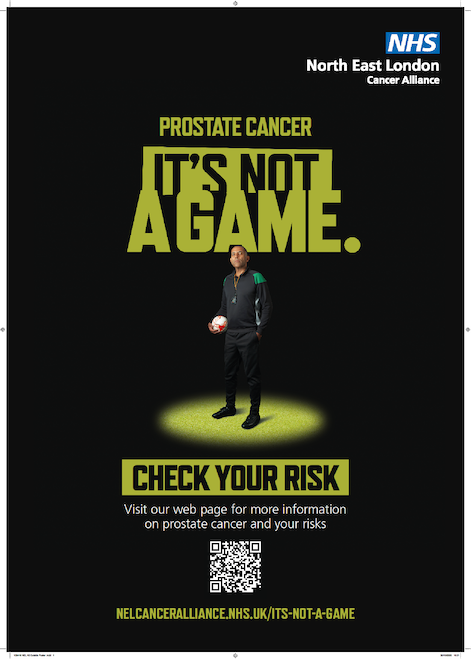
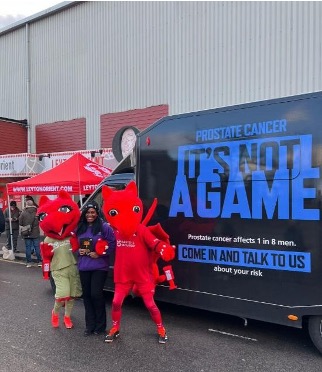
To tackle these inequalities, North East London Cancer Alliance expanded their It's Not A Game campaign with an innovative community outreach programme, combining targeted digital marketing with face-to-face conversations through a branded awareness van. The campaign aimed to meet people where they already were, making conversations about prostate cancer easier, more accessible and more relevant.
What did we do?
Building on the success of the wider It's Not A Game campaign, North East London Cancer Alliance launched a 12-week outreach programme focused specifically on prostate cancer awareness.
The cam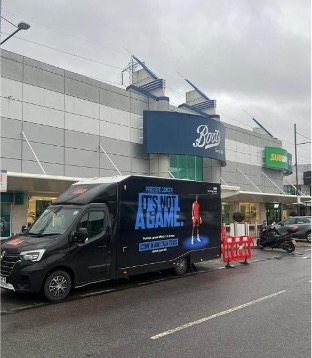 paign centred on a fully branded outreach van, supported by trained community ambassadors, which visited carefully selected high-footfall locations across north east London including supermarkets, retail parks, markets, sports centres and a matchday at Leyton Orient Football Club.
The van spent three consecutive days at each location to maximise visibility and engagement. The campaign was designed to reach:
- men aged 45 and over
- Black men, who are around twice as likely to develop prostate cancer
- people living in areas of higher deprivation
- families and communities who could encourage loved ones to understand their risk.
Rather than relying solely on advertising, the campaign adopted a hybrid approach by combining digital communications with personal conversations. Digital advertising on social media directed people towards the campaign, while the outreach van gave residents the opportunity to ask questions in a relaxed, informal environment.
The campaign was delivered in partnership with:
- EMS, who designed the vehicle wrap, fitted out the van and helped identify high-footfall locations.
- Mobas, who refreshed campaign creative, delivered location-specific social media advertising and coordinated the distribution of more than 32,000 leaflets.
- Prostate Cancer UK, whose online Risk Checker formed a key part of the campaign and helped residents understand their individual level of risk.
Community ambassadors were recruited by EMS and received specialist training from James Green, Consultant Urological Surgeon at Barts Health. This ensured they could confidently explain:
- prostate cancer risk factors
- common signs and symptoms
- the role of PSA blood testing
- how the Prostate Cancer UK Risk Checker works
- common myths, including addressing fears around rectal examinations.
Residents con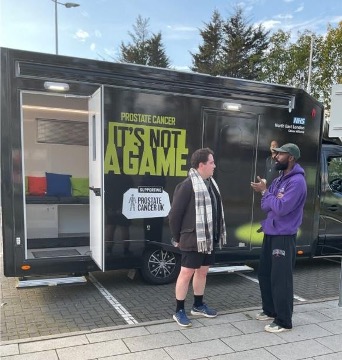 sistently reported that being able to have an open, face-to-face conversation made them feel more confident about discussing prostate cancer and seeking help if needed.
The campaign also reinforced key messages already promoted through the It's Not A Game prostate cancer campaign, encouraging men to know their risk, recognise symptoms and speak to their GP if they had concerns.
What was the impact?
The campaign generated significant reach across north east London while also demonstrating genuine behaviour change. The activity achieved:
- 5.7 million impressions
- more than 418,000 people reached
- over 4,200 public interactions
- 1,768 high-quality conversations
- 715 completed evaluation surveys.
Importantly, these were not simply brief interactions. Many conversations explored family history, ethnicity, symptoms and concerns around testing, helping residents make informed decisions about their health.
Increased understanding
Evaluation surveys showed a dramatic increase in knowledge.
Average understanding of prostate cancer increased from 5.9 out of 10 before engagement to approximately 9.5 out of 10 afterwards—an improvement of around 60%. This improvement was seen consistently across different ages, locations and ethnic groups.
Successfully reaching higher-risk communities
The campaign performed particularly well in communities where awareness is often lowest.
Engagement was strongest among:
- men aged 45 years and over
- Black, Asian and Mixed ethnicity communities
- residents living in Newham, Redbridge, Waltham Forest and Barking & Dagenham.
Many participants reported they knew little about their family history or personal risk before speaking to ambassadors. Surveys also found that most participants had never previously had a PSA blood test but were more willing to use the Risk Checker and discuss testing with their GP afterwards.
Many also said they had not realised that a PSA test is simply a blood test, helping overcome one of the biggest misconceptions surrounding prostate cancer.
Encouraging action
The campaign encouraged residents to move beyond awareness and take practical action.
Around 59% of survey respondents completed the Prostate Cancer UK Risk Checker during or shortly after their interaction with the campaign.
Of those completing the Risk Checker:
- approximately 70% were identified as being at higher risk
- older men and Black men were particularly likely to receive higher-risk results, reinforcing the importance of targeted community engagement.
What people told us
The campaign generated overwhelmingly positive feedback, demonstrating how valuable trusted community conversations can be.
Residents said:
"Didn't know a PSA test is a blood test."
"Happy to hear blood is the only thing needed."
"Not something we discuss in our community but I will go back and tell them."
"I'm a survivor of prostate cancer. Good that you are spreading awareness."
"My husband is in his 40s. I didn't know he had a higher risk because of his ethnicity. I'll share this information with him."
These comments highlight how increasing knowledge can empower individuals to have conversations with family members and encourage earlier presentation to healthcare services.
“I’m really pleased to see the wide-reaching impact of our work, which has resulted in us speaking directly to many men about prostate cancer and their risk, which could ultimately save lives.” Dimple Makwana, Project Manager, North East London Cancer Alliance.
What happens next?
The campaign demonstrated that combining targeted digital communications with face-to-face community engagement can successfully reach people who are often underrepresented in traditional awareness campaigns.
Key learning from the project includes:
- taking health information directly into communities helps engage people who may not proactively seek information
- trained, trusted ambassadors are highly effective at addressing myths and answering questions in a trusted environment
- partnerships with community organisations and national charities increase campaign credibility and reach
- combining digital advertising with community engagement delivers greater impact than either approach alone
- simple tools such as the Prostate Cancer UK Risk Checker provide an effective bridge between awareness and action.
North East London Cancer Alliance will use these insights to shape future cancer awareness campaigns, continuing to target communities experiencing the greatest inequalities while building confidence, improving knowledge and encouraging earlier diagnosis. This is a key part of delivering North East London Cancer Alliance’s Health Inequalities Strategy.
The campaign has shown that meaningful conversations can change understanding, challenge misconceptions and empower people to take action for themselves and those around them. By continuing to take cancer awareness into local communities, the cancer alliance hopes to help more people recognise their risk earlier and ultimately improve cancer outcomes across north east London.