Celebrating Black History Month with Femi Odewale



To mark Black History Month, we spoke to Femi Odewale, Managing Director of North East London Cancer Alliance, about his career, what Black History Month means to him, the importance of trust, and why listening to our diverse communities is essential if we are to make cancer care more equitable.
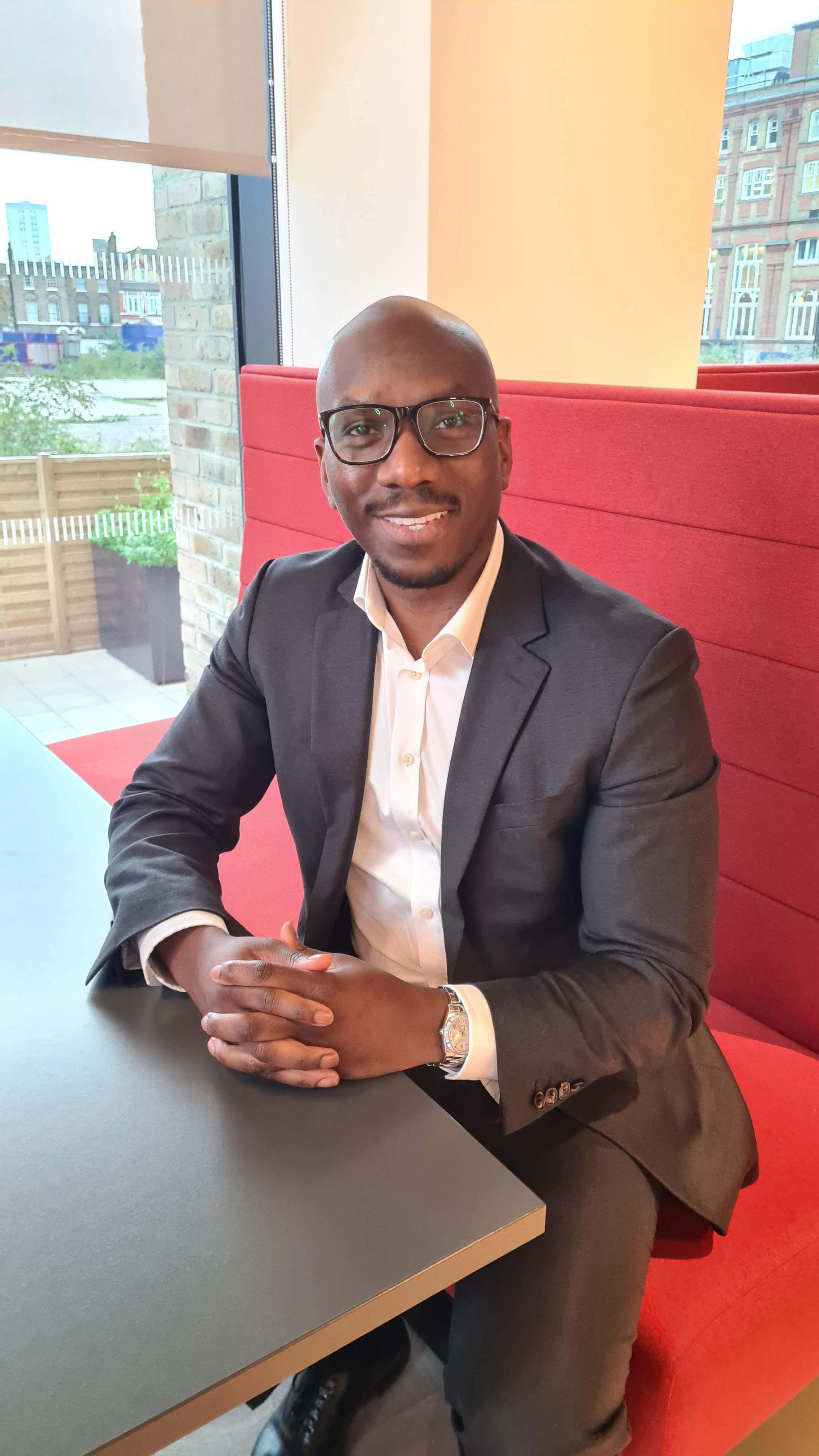
Femi, tell us a little about yourself and your role in north east London
Hello, I’m Femi Odewale and I’m the Managing Director of North East London Cancer Alliance.
I have worked in senior operational roles delivering services in hospitals for more than two decades, and today I have the privilege of leading the Cancer Alliance and working with colleagues and partners across north east London.
Our role is to improve cancer services for everyone who lives here and to reduce inequalities in cancer care. We bring together hospitals, primary care, patients, communities and other partners across the whole cancer pathway, from preventing cancer and diagnosing it earlier, through to diagnosis and treatment and supporting people living with and beyond cancer.
North east London is an incredibly diverse place and that is one of its greatest strengths. It also means we need to make sure our cancer services understand and respond to the different experiences and needs of the communities we serve.
What does Black History Month mean to you?
Black History Month is an important opportunity to recognise and celebrate the contribution Black women and men have made throughout history, but also to shine a light on what people are achieving today.
For me, though, this can't be something we think about for just one month of the year.
Tackling inequalities, celebrating diversity and making sure people have equal opportunities should be part of what we do every day.
That is particularly important in north east London. We have one of the most diverse populations in the country and we know people's experiences of healthcare can be very different.
Our job is to understand those differences and make sure everyone has the opportunity to receive the best possible cancer care, regardless of their background or where they live.
We are fortunate to have fantastic people working across north east London who are doing incredible things to tackle inequalities. I think it is important that we recognise and celebrate that work throughout the year.
How has your own background and experience shaped the way you lead?
My own background has certainly influenced how I think about inclusion and the importance of listening.
Being from an ethnic minority can give you your own experiences and perspectives, but one of the things I have learned is that none of us should assume we understand somebody else's experience.
North east London contains many different communities, cultures, languages and experiences. The most important thing we can do is listen to people, involve them in the decisions we make and understand the barriers they face.
That is one of the reasons reducing health inequalities is such an important priority for the Cancer Alliance. Our Health Inequalities Strategy, which we launched this year, recognises that factors including deprivation, ethnicity, disability, language and digital exclusion can affect people's experiences of cancer care.
As a leader, I have an opportunity to help make sure those voices are heard and that what we learn translates into action.
What are you particularly proud of?
I am very proud to be a Black leader in the NHS and to be part of such a diverse workforce serving such a diverse population.
As part of my work with the Cancer Alliance, one of the things I am most proud of is the relationships we have built between the people who deliver cancer care, the people who receive that care and the many organisations and communities involved along the way.
When I first joined the Cancer Alliance, I spent time bringing people together, understanding what our partners needed and discussing how the Cancer Alliance could best support them.
Cancer care is incredibly complex, and no single organisation can improve it alone. Hospitals, GPs, community organisations, charities, patients and many others all have a role to play.
I have always believed that one of the most important things we can do as an Alliance is create the conditions for those people to work together. Ultimately, we are all trying to achieve the same thing, better care and better outcomes for our patients. It’s how we work collaboratively that will make the difference.
What have you learned from patients and communities?
One of the biggest lessons for me is that there can never be a one-size-fits-all approach to patient care.
An example that has always stayed with me came from one of our early podcast episodes. A Black woman with cancer spoke about aspects of her care that simply hadn't been designed with her in mind, including being unable to access a wig suitable for Black hair.
To someone designing a service, something like that might appear to be a small detail. To the person going through cancer treatment, however, it can make a huge difference to whether they feel understood, supported and cared for.
It is a reminder that equity doesn't always mean creating an entirely new service. Sometimes it means looking carefully at the services we already provide and asking whether they work equally well for everyone.
Listening to our patients and communities is how we discover those things.
Why is trust so important?
Trust is absolutely fundamental. And we know we need to build trust again in our communities to overcome experiences faced by previous generations.
However, we can't simply expect communities to trust us. We have to earn that trust by listening, being visible and demonstrating that we act on what people tell us.
Some of our most successful work has involved going out into communities and working alongside people and organisations they already know and trust. That might mean talking to people in a place of worship, a library or community centre, or even in a supermarket car park!
It is about taking healthcare conversations to people rather than always expecting people to come to us.
Our relationships with community organisations and trusted local leaders are therefore incredibly important. They help us understand what matters to people, identify barriers we might otherwise miss and communicate health information in ways that are relevant to the communities we are trying to reach.
What changes would you like to see in the future?
I would like to reach a point where someone's ethnicity, background, postcode, income or first language doesn't negatively affect their experience of cancer care or their chances of a good outcome.
We have made progress, but we also have to be realistic that change won't happen overnight.
The evidence tells us there are still differences in people's experiences of cancer care. For example, the National Cancer Patient Experience Survey has identified differences between ethnic groups in areas including communication and how people experience parts of their diagnosis and treatment. Those differences remind us why this work matters.
We need to keep listening, keep asking where the gaps are and, most importantly, act on what our patients and communities tell us.
Where do you see the biggest opportunities to make a difference?
Technology gives us some exciting opportunities to make cancer information and services more accessible, but it has to go hand in hand with strong relationships with our communities.
For example, our website uses Recite Me technology which allows people to translate information into more than 100 languages and can read information aloud. We have also developed digital tools such as our 24/7 chatbot, which provides people with information to help them prepare for a bowel test at any time of the day or night.
But technology is only part of the answer.
Some of our most important work is happening through partnerships with community organisations such as Touch-Feely, a passionate organisation committed to supporting women from underrepresented ethnic groups affected by cancer, and From Me To You, a charity helping tackle health inequalities in cancer care for Black communities.
These partnerships are helping us to better understand and reach Black communities across north east London.
For me, the future is about combining innovation with that human connection. We need to use new technology where it can help, but never lose sight of the importance of listening, relationships and trust.
Finally, what would you say to the next generation of Black NHS leaders?
I would encourage people to believe that leadership is something they can aspire to and that their experiences and perspectives have real value.
We need a health service whose leadership reflects the communities and workforce it serves. Different backgrounds bring different perspectives to the table, and that can help us ask better questions and make better decisions.
I would also say: listen to people, build relationships and don't underestimate your ability to make a difference.
Throughout my career, I have learned that change rarely comes from one person or one organisation. It comes from people working together, understanding each other and being prepared to challenge ourselves to do things differently.
Black History Month gives us an opportunity to celebrate how far we have come and the contribution Black people make across the NHS and our communities. But it should also encourage us to think about what comes next. There is still more to do – and I am excited to be part of that journey.
Similar articles
Breast cancer awareness month 2026
Shades of survival shines spotlight on cancer inequalities